Cycling Coach Manchester: Train for Peak District Climbs
Manchester riders do not need to travel far to find demanding terrain.
The roads towards the Peak District can move quickly from rolling to steep. A social ride can become a sequence of threshold efforts. A headwind or wet descent changes the cost again. The same route may be productive training one week and unnecessary fatigue the next.
A cycling coach in Manchester should help you use that terrain with purpose.
What makes cycling coaching in Manchester different?
Manchester combines several useful training environments: urban riding, indoor facilities, flatter roads to the west and sustained climbing towards the Pennines and Peak District.
The Bee Network is expanding walking, wheeling and cycling connections across Greater Manchester. The Peak District National Park also publishes routes across quiet lanes, bridleways and traffic-free trails for different rider levels.
Access is not the same as structure. Good cycling coaching for Manchester and UK riders connects the available terrain to the adaptation the rider needs.
That is different from simply trying to finish every local climb as fast as possible.
Which sessions help with Peak District climbs?
Start with the demands of the goal. A short hill-climb event, a hilly sportive and a long social ride through the Peak District require different combinations of power, durability, pacing and fuelling.
| Training need | Useful session type | What the coach should monitor |
|---|---|---|
| Sustainable climbing | Threshold or upper-tempo intervals | Power or effort stability and recovery cost |
| Short steep ramps | Short high-intensity intervals | Repeatability, technique and adequate recovery |
| Long hilly sportives | Endurance rides with controlled climbing | Durability, fuelling and late-ride pacing |
| Strength and resilience | Progressive off-bike strength work | Movement quality, load and interference with cycling |
| Wet or unsafe weather | Indoor alternative with the same objective | Whether the replacement preserves the week's direction |
The session label matters less than its purpose. The Flow Momentum knowledge base on interval training makes this explicit: riders should understand why an interval is in the programme, what it is intended to improve and how their response will be assessed.
How can route planning use Manchester's terrain?
A Manchester plan can use different terrain for different jobs.
| Local option | Best use in the plan | Important limitation |
|---|---|---|
| Urban commute and Bee Network links | Transport, easy volume and skills | Junctions and surges reduce control |
| Canal routes | Easy riding, access and lower-intensity time | Surface, pedestrians and narrow sections may rule out intervals |
| Peak District and Pennines | Climbing, durability, pacing and event specificity | Weather and accumulated elevation increase recovery cost |
| Yorkshire Dales day ride | Long endurance and fuelling rehearsal | Travel time and total load need planning |
| Smart trainer | Controlled threshold, VO2 or recovery work | Does not train descending, road judgement or outdoor handling |
Flow Momentum's live route planner uses Google Maps Routes and Elevation data. A rider can enter a start and destination or request an out-and-back route for a target duration. The result shows distance, elevation and estimated time, and identifies a candidate interval segment. That makes it possible to connect the day's Performance Coach prescription to the commute or choose terrain for the weekly long ride.
It is not a scenic-route guarantee, and it does not replace a rider's safety judgement. The useful difference is that route choice, workout purpose and available time sit in the same decision.
Pacing matters more than attacking every slope
Many riders start a climb according to how fresh they feel in the first minute. That can be costly when the gradient changes or more climbs follow.
Recent modelling and small case studies reinforce the value of individual pacing. A 2026 study used cyclists' power-duration characteristics to produce practical pacing strategies for time trials and hill climbs. The sample was small, so the exact gains should not be generalised. The useful principle is stronger: pacing should reflect the rider and the course rather than a generic percentage.
Power can help, but it is not compulsory. Heart rate, perceived exertion, breathing and route knowledge still matter. Our guide to how AI cycling coaching works explains why missing data should lead to more conservative guidance, not false precision.
Do Manchester cyclists need strength training?
Heavy strength training can improve several physiological determinants of endurance cycling performance. A 2025 systematic review with meta-analysis supports its potential value, while also noting that programme design and transfer to cycling require judgement.
The practical mistake is to add a generic gym plan on top of hard riding.
Strength work should be progressed according to movement capacity and training phase. It also needs space around demanding bike sessions. The Flow Momentum conditioning framework recommends separating heavy endurance and resistance work where possible, supporting recovery and avoiding repeated training to failure.
If pain, injury or movement quality is the issue, involve an appropriate physio, doctor or qualified strength professional.
How should weather change the plan?
North West weather is not a training failure.
It is a planning variable. If wind, ice, visibility or surface conditions make the intended outdoor session unsafe, an indoor replacement can preserve the objective. A 30-minute indoor climbing workout may provide a useful high-intensity stimulus, but it does not replace outdoor handling, descending or long-duration fuelling practice.
A coach should distinguish between the physiological objective and the outdoor skill objective. Sometimes the indoor session is a direct substitute. Sometimes the correct decision is to move the outdoor session rather than pretend both are equivalent.
This is one reason online coaching works well for busy riders. Tell the Performance Coach that the weather, work diary or available time has changed, and it can preserve the intended adaptation while proposing a safer route, a shorter session or a smart-trainer alternative. It is available when the change happens, rather than only at the next scheduled check-in.
That higher adjustment frequency can make the guidance more individual than a static human-written plan. It does not make AI universally better than a human coach. Human judgement remains valuable for ambiguity, accountability, technique and decisions that need direct observation. Our guide to online versus in-person cycling coaching explains the difference.
What can Manchester Velodrome add?
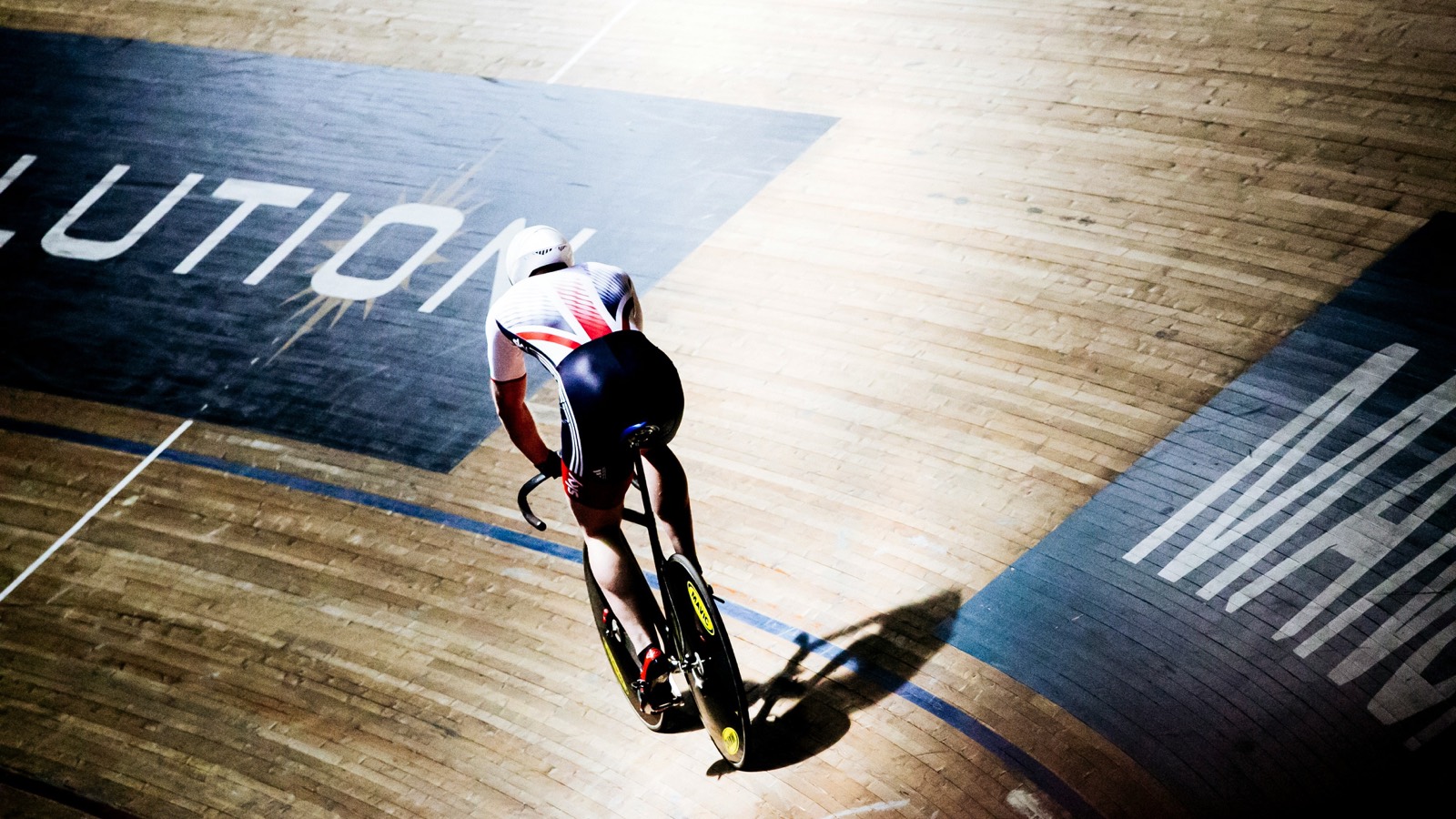
The National Cycling Centre gives Manchester riders an option that few UK cities can match. Its 250-metre indoor track offers coached Intro sessions for newcomers and a staged rider-development pathway for more experienced riders.
Track riding can develop cadence, speed awareness, positioning and confidence in a controlled environment. It is not a direct replacement for Peak District climbing or long-ride fuelling. The venue's coach controls the track session, while Flow Momentum can place that session in the wider week so it supports rather than disrupts the rider's main goal.
A practical Manchester training week
For a rider with five to seven available hours, a week might contain:
- One controlled interval session indoors or on a suitable uninterrupted climb.
- One easy endurance or recovery ride.
- One progressive strength session when appropriate.
- One longer weekend ride that includes event-relevant terrain.
- At least one clear recovery day.
This is an example, not a prescription. The right week depends on the athlete's history, goal, commute, work stress and response to previous training.
Riders travelling regularly between Manchester and London need an especially portable plan. Indoor alternatives, clear intensity anchors and short feedback loops keep the training coherent when local terrain changes.
You can compare the available Flow Momentum coaching plans by the level of adaptation and support you need.
What should you ask a Manchester cycling coach?
Before starting, ask:
- How will the plan reflect the climbs and duration of my target event?
- How will indoor sessions replace outdoor work during poor weather?
- Will group rides count as hard training when the pace surges?
- How will power, heart rate and perceived effort be used together?
- When will the coach recommend an in-person skills, medical or bike-fit assessment?
A local keyword in a page title is not enough. The answer should show how the coach will make local terrain useful.
Ask Flow Momentum
Try:
"I commute in Manchester, have six hours a week and want a long Peak District ride on Saturday. Plan the week's terrain, identify a suitable interval segment, and give me a smart-trainer replacement if Friday's weather makes the outdoor session unsafe. I also have a booked velodrome Intro session next week."
A useful answer should identify the event demands, propose a manageable weekly rhythm, explain the role of each session and define what feedback will change the plan.
Try this week
Choose one regular climb and stop treating the summit time as the only result.
Record your pacing, perceived effort and how well you can repeat the effort later in the ride. Repeatability often tells a coach more than one fresh personal best.
Frequently asked questions
Closing thought
Manchester gives cyclists excellent terrain. Coaching turns that terrain from a test of will into a repeatable training tool.
Sources
- Peak District National Park: Official cycle routes
- Transport for Greater Manchester: The Bee Network
- Case studies on time-trial and hill-climb pacing strategies, 2026
- Heavy strength training and endurance cycling performance, systematic review with meta-analysis, 2025
- YouTube: Climb Strong, 30-minute indoor cycling hill workout, LKCYCLING, 28 May 2026
- Public X signal: Free adult cycle training across Greater Manchester, 17 June 2026
- National Cycling Centre: Manchester Velodrome and rider-development pathway
- National Cycling Centre: Intro and Taster Velodrome sessions
Get the next Note
Practical ideas on performance, recovery, AI and better work — straight to your inbox.